

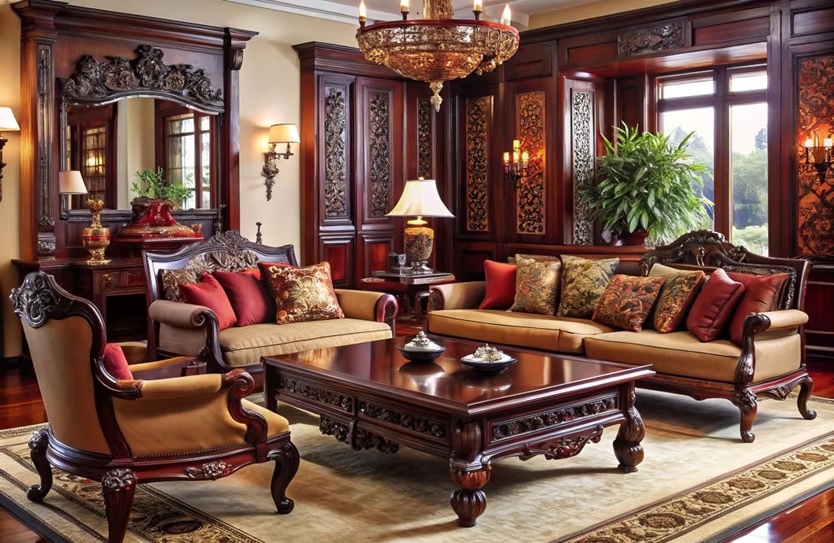
Traditionally, Indian craftsmen have adored using richly stained types of wood and the arts that make living spaces warm and habitable. Nowadays, rosewood and sheesham may serve as inspiration for the design but can be used in combination with veneer technology to embellish more modern furniture aesthetics. This technology helps to introduce vintage wood surfaces into modern living rooms.
Rosewood and Sheesham: Distinctive Features
Rosewood lends itself to darker color palettes with strong textures. Sheesham is known for its browner shades and its wild patterns formed due to the wood’s natural properties. As a veneer, it retains its qualities but allows for a flexible modern design.
By using veneer made of traditional Indian wood, you can create some continuity with the known traditions of the material while ensuring that it fits in modern interiors. The same goes for choosing between dark and warm shades of the wood, where the differences lie in how the furniture will be perceived in the rooms.
Rosewood Veneer for Original Furniture Pieces
An application of rosewood veneer sheet India will elevate the look of entertainment centers, cabinets, sideboards, and wall panels. Its distinctive textures may become even more apparent thanks to simple-looking furniture and home decorations nearby. Designers should consider using veneer that resembles rosewood rather than using this type of wood to finish each piece of furniture around the room. In this way, the media console, cabinet, or wall with such a wood finish can provide a contrast to the lighter materials that are used in other parts of the room while completing the look of the room.
Using Sheesham for Warmth in Design
Sheesham is usually associated with Indian furniture and is often used in traditional designs; however, you can use the characteristic surface of this wood instead. Thus, with the help of sheesham-finished wood veneer furniture items, you can add warmth to the modern style of a coffee table, cupboard, shelving system, console or cabinet.
Minimalistic designs and the absence of additional decoration let the wood play the major role as a decorative element of the design. Thus, you get the effect of sheesham wood without creating an old-fashioned design.
Mixing Heritage Wood with Contemporary Materials
Traditional Indian wood veneer is used together with other materials,s and this way it becomes more versatile. For example, stone, glass, metal,al and textile can serve to contrast either the darker wood surfaces or the surfaces of warm colors.
For example, the entertainment system with dark wood veneer should be combined with a light floor and neutral-colored seating, and the furniture made of sheesham wood should match with light shades such as beige, cream, and earthy tones. The use of a natural grain, proper colour, and sophisticated detail can evoke feelings of heritage whilst preserving the modern traits of the furniture piece.
Here, heritage luxury furniture veneer is highly effective,e as the veneer collection of Royale Touche could serve as an inspiration source for designers exploring natural wood looks when designing pieces of furniture and interiors with modern characteristics.
The Importance of Finish and Grain Direction
The final look of veneer is defined not only by the colour. The direction of grain can be chosen to emphasise the proportions of, for instance, a cabinet, console, or wall panel, while the type of finish affects the perception of the grain and colour.
For example, a rosewood veneer sheet in India would be appropriate for a space that needs to have a rich visual impact. A sheesham finish wood veneer would suit a lot of spaces much better due to its warmer look. All lights should be taken into account, as daylight and artificial lights are able to change the perception of wood tones during the day.
The Best Places to Use Rosewood and Sheesham
Living-room furniture offers a great deal of opportunities for the use of such heritage styles. One may use veneer in entertainment units, coffee tables, display cabinets, shelves, sideboards, consoles, and decorated walls without dominating the whole room with wood.
Using the same wood tones among furniture helps to create integrity, and using simple surfaces around the wood will not let the wood dominate visually.
Conclusion
The use of rosewood and sheesham veneers helps introduce warmth, impressive grain, and Indian heritage into contemporary living rooms. Rosewood veneer sheets in India, as well as sheesham-finished wood veneer, can be used in modern furniture, and their combination with different restrained materials helps to create a connection between modernity and the features of heritage luxury furniture veneer.